

Evel Knievel's Nuts
A poem from the forthcoming collection 'red, white, and blues'

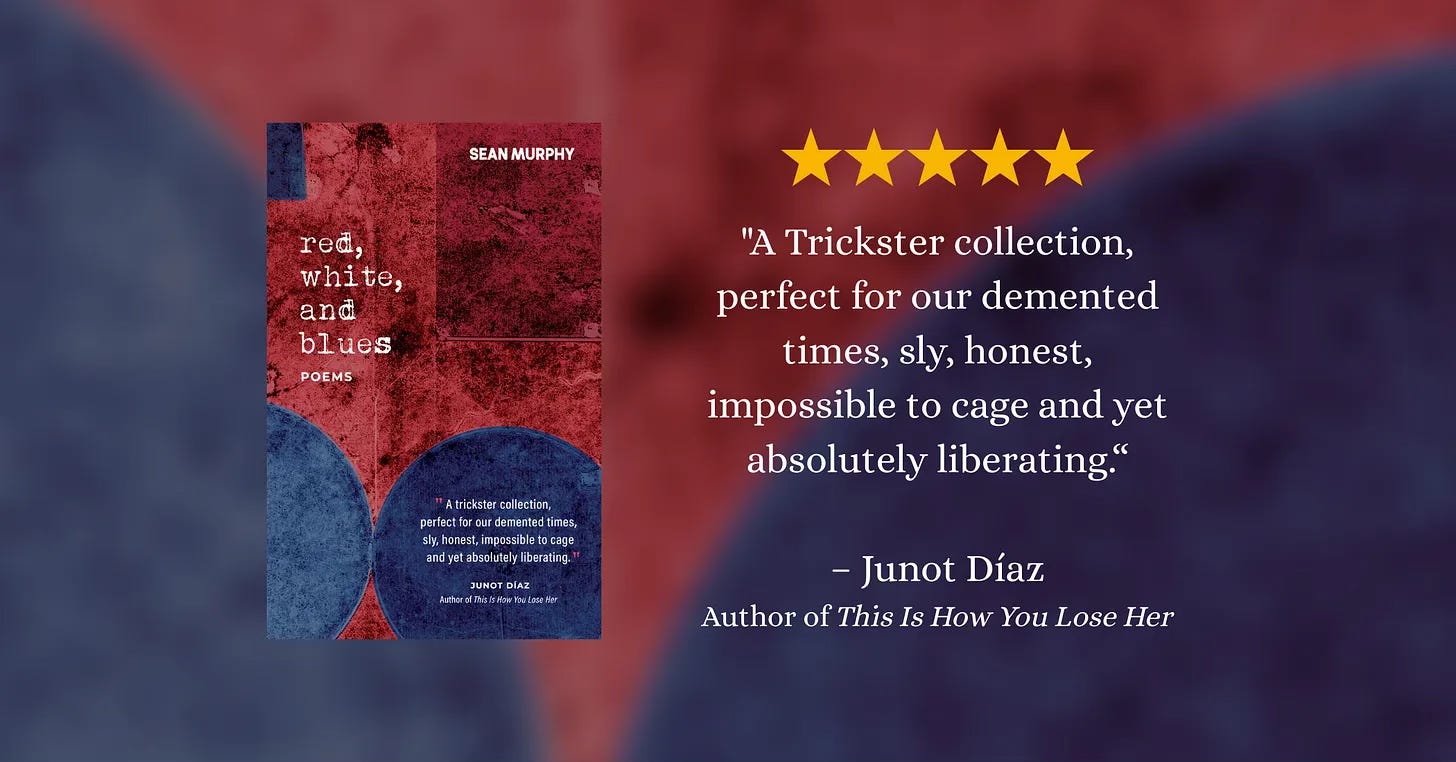
red, white, and blues is the fourth installment of a large, ongoing project acclaimed artist Matthew Shipp describes as “a kaleidoscopic, deep, and opulent journey.” Once more, I’m exploring America and its mythology through a series of poems that function as biography, history, and cultural commentary. Where the previous collections interrogated these concerns primarily through the lens of jazz and blues musicians, these poems home in on politics—and key players who have shaped our shared culture. A moral cross-examination covering history, war, religion, and pop spectacle, this collection asks what we worship, what we excuse, and what the stories we tell do to us.
I wrote red, white, and blues because I believe poetry can still tell the truth when other forms have failed us. These poems are not interested in neutrality; they are interested in clarity. They move through history and pop culture because that is where our myths live—where power learns to hide and where harm learns to look inevitable. (I also have come to believe poetry is the best way to mash up history, media, political commentary, and provides a succinct formula for connecting dots in ways Op-Eds, fiction, and social media grandstanding can’t and won’t). I wanted to write a book that names what we worship, what we excuse, and what we leave behind, while still honoring the strange, stubborn beauty that survives in language. If these poems bruise, I hope they also invite conversation. If they provoke, I hope they also connect. Art matters because it reminds us that we are not alone in our witnessing.
These poems are political, name names, and while I don’t have any illusions my modest efforts can affect the type of meaningful change we desperately need, it’s a flag flown in solidarity, and a middle finger to the establishment. As such, I think it’s coming into the world at the right time—and perhaps can inspire some dialogue or instigate something positive.
It’s at once more difficult and more satisfying to try and nail down a scumbag like Jeff Bezos and capture his essence, in less than one page, than it is to write dozens of impassioned, ultimately ineffectual and instantly dated Op-Eds. Hence what I’m trying to accomplish with this poetic project. Whether my modest efforts make the slightest difference matters less to me than the fact that this poem will be relevant and applicable one year, ten years, one hundred years from now. When the buffoon that’s helping wreck the planet is a gross footnote to an era when America was at its worst, and some of the sickest people who ever shared oxygen with other human beings ruled the world. Like Ozymandias, their time was brief, the damage significant, and their example used as cautionary tale.
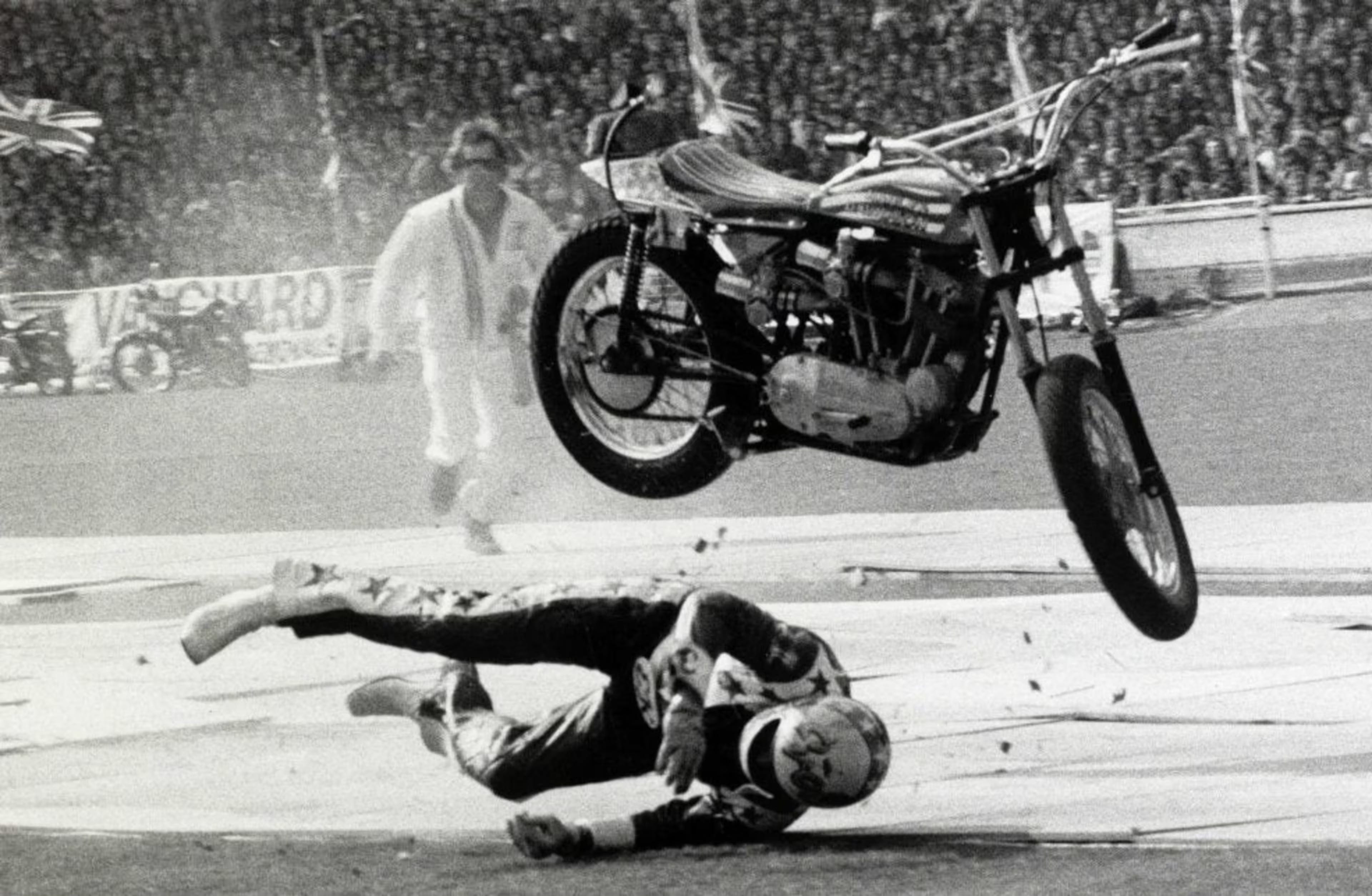
Evel Knievel’s Nuts
That’s what everyone said: the guy’s nuts. But there’s good money in being
crazy, the only catch being you have to survive in order to spend it. Bones,
like records, are meant to broken, assuming you’re the one doing the
breaking (also, using a baseball bat on another man is simply bad
business). You have to not care just enough, and that’s the difference
between clearing a jump and ending up with your ass broken in Snake
River Canyon. Or with portions of yourself you can’t afford to lose spread
along the asphalt at Caesar’s Palace. To do that kind of damage one must
already be impaired in ways paying crowds can’t see on TV. But that’s part
of what being a man is, or at least certain types of men. The type of man,
for instance, who jumps the Grand Canyon. Or the men who enlist for war
then go back for more, not for money or even so-called glory, but because
there’s a juice to that action civilian life can’t approximate. Or bank
robbers: they need the bread, but there are other ways to rip off the system;
part of the fun, they know, is the thrill of the chase, the uncertainty of
making it out alive. Also knowing, in advance, that no one gets out of this
mess still breathing, no matter how hard we pray death away. And most of
all, avoiding any career run by clocks, which leave you for dead long
before you’re underground. Only a handful ever figure out you’re not truly
alive until people know you by a nickname. And if you occasionally prove
what goes up doesn’t necessarily come down, you’ll live forever.