

Jeff Bezos's Billions
A poem from the forthcoming collection 'red, white, and blues'

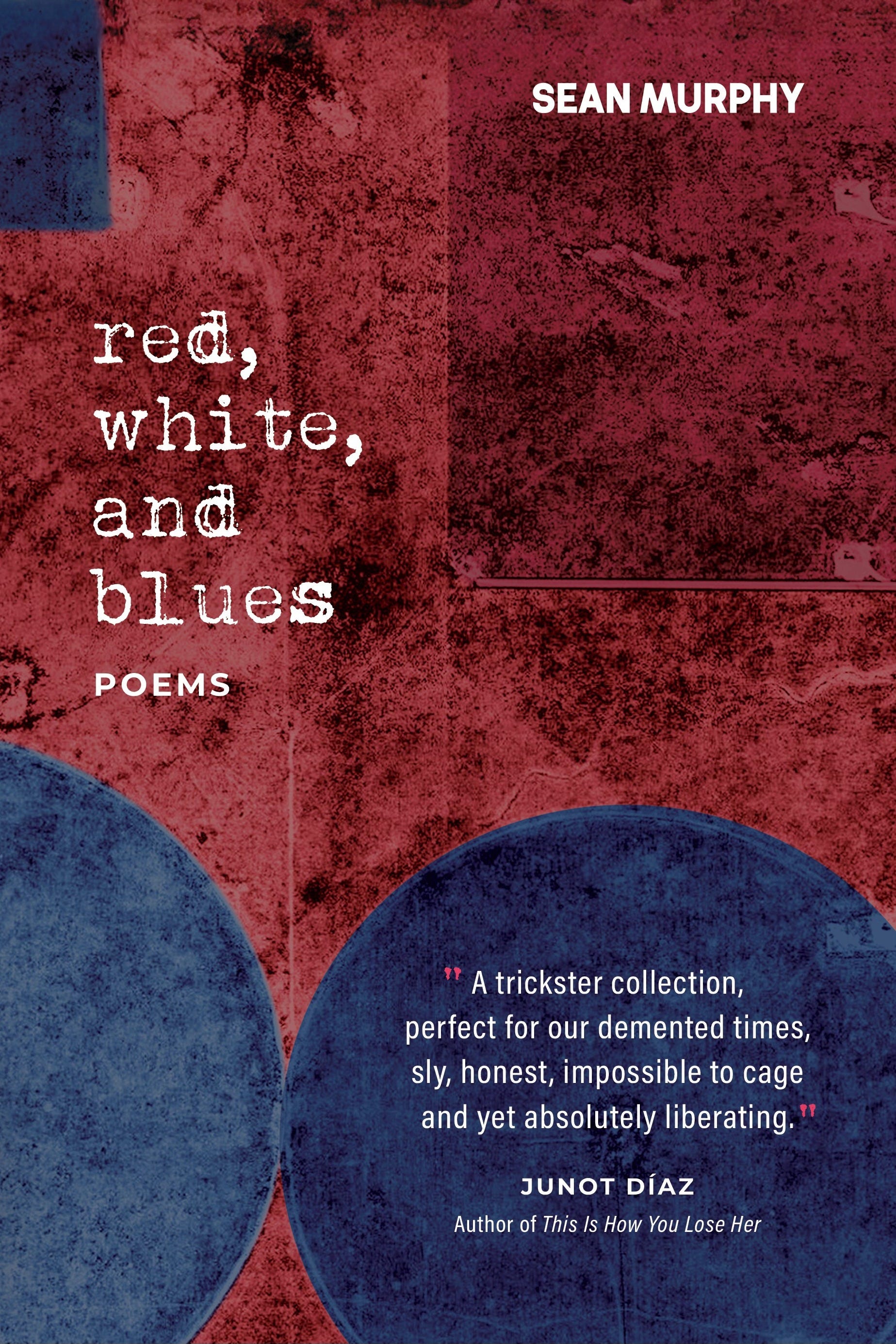
red, white, and blues is the fourth installment of a large, ongoing project acclaimed artist Matthew Shipp describes as “a kaleidoscopic, deep, and opulent journey.” Once more, I’m exploring America and its mythology through a series of poems that function as biography, history, and cultural commentary. Where the previous collections interrogated these concerns primarily through the lens of jazz and blues musicians, these poems home in on politics—and key players who have shaped our shared culture. A moral cross-examination covering history, war, religion, and pop spectacle, this collection asks what we worship, what we excuse, and what the stories we tell do to us.
I wrote red, white, and blues because I believe poetry can still tell the truth when other forms have failed us. These poems are not interested in neutrality; they are interested in clarity. They move through history and pop culture because that is where our myths live—where power learns to hide and where harm learns to look inevitable. (I also have come to believe poetry is the best way to mash up history, media, political commentary, and provides a succinct formula for connecting dots in ways Op-Eds, fiction, and social media grandstanding can’t and won’t—see below). I wanted to write a book that names what we worship, what we excuse, and what we leave behind, while still honoring the strange, stubborn beauty that survives in language. If these poems bruise, I hope they also invite conversation. If they provoke, I hope they also connect. Art matters because it reminds us that we are not alone in our witnessing.
These poems are political, name names, and while I don’t have any illusions my modest efforts can affect the type of meaningful change we desperately need, it’s a flag flown in solidarity, and a middle finger to the establishment. As such, I think it’s coming into the world at the right time—and perhaps can inspire some dialogue or instigate something positive.
It’s at once more difficult and more satisfying to try and nail down a scumbag like Jeff Bezos and capture his essence, in less than one page, than it is to write dozens of impassioned, ultimately ineffectual and instantly dated Op-Eds. Hence what I’m trying to accomplish with this poetic project. Whether my modest efforts make the slightest difference matters less to me than the fact that this poem will be relevant and applicable one year, ten years, one hundred years from now. When the buffoon that’s helping wreck the planet is a gross footnote to an era when America was at its worst, and some of the sickest people who ever shared oxygen with other human beings ruled the world. Like Ozymandias, their time was brief, the damage significant, and their example used as cautionary tale.
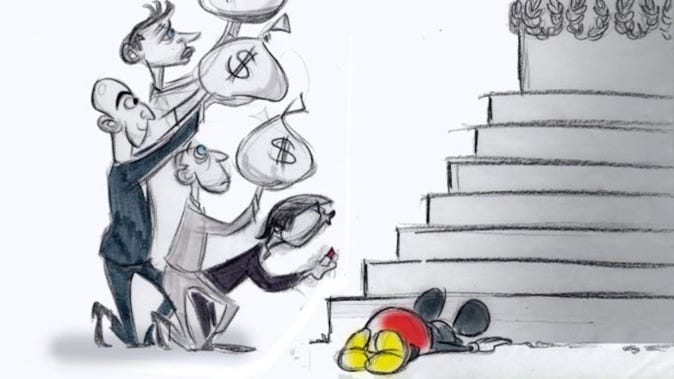
(Real time edit: I had this post queued up before Wednesday’s predictable, but still appalling news broke. The writing's been on the wall for a while, but this debacle still manages to shock and appall. Simply a naked statement of late-stage capitalist hubris and nihilism. When an intentionally self-inflicted wound kills everyone but the person pulling the proverbial trigger, this is how empires die. More, still, about Bezos and the Washington Post, to come.)
Last February in a post entitled Thank You, Jeff Bezos (full piece here), I wrote:
He has just done, with one oleaginous gesture, what it would take hundreds of Op-Ed writers many years to accomplish because, as writers recognize as much or more than anyone else, it really is about showing, not telling. Part of the reason we're in this mess is because it manages to be at once easy and impossible to describe the sheer sociopathy on display, to articulate how a razor thin election can be appropriated and presented, with a depressing level of success, as a landslide mandate. Or, that this “mandate” involved the winner squeaking out a victory by insisting he'd bring down prices and not touch the very services so many Americans (particularly those in reliably red states) depend on, that the Project 25 blueprint he claimed to know nothing about is now being followed lockstep by malevolent bootlickers, giddy to set two centuries of decorum and order on fire. (It’s at once meme and cliche, but this guy was speaking big truths.)
To be very clear: I am disgusted by this selfish, craven behavior, this unbridled expression of greed and accommodation (in the sake of accruing more money and power), but I’m not surprised—and I’m mostly relieved that it happened sooner than later, and with such clarity. And while I feel awful for the discarded journalists (just like, of course, I have endless empathy for all the government workers whose careers—whose entire lives—are being upended for no reason other than to momentarily amuse the biggest pricks on the planet), I will point out that all mainstream media is ultimately beholden to a single motive: profit.
No one is coming to save us.
Rather than despair that the mainstream media, which has been taking on water for most of this century, is now a combination billboard for billionaires and rotting corpse left out in the rain, be grateful there are myriad brave, uncompromised voices making noise, and providing the light necessary to navigate the way forward. The old world many of us, even the most cynical, maybe took for granted is never coming back. It’s gone, and we are now in a different battle: to arrest the speed with which the absurd people seated in the front row of Trump’s inauguration (and the relative handful of global despots and CEOs who both fund and profit from this chicanery) are dismantling America like a stolen car in a chop shop. The only hope, and sole path forward, is non-profit media. As oxymoronic as it seems in our info-overload, intensely crowded and competitive environment, it’s the last good possibility for honest, unfettered voices to emerge from this wreckage.
Jeff Bezos’s Billions
Billion-dollar babies are building their own toys,
taking them to outer space (inner space, of course,
that final frontier the wealthy will never breach).
*
The rest of us are stuck here on earth, amazed
and mystified by how humans understood shit
fertilized their fields, or how to create panacea
out of potatoes, or that, speaking again of waste,
we turned chamber pots into sewage systems—
the kind of revolution that launches rocket ships.
*
What we consume, recycled and repurposed,
still seems as miraculous as electricity or energy
derived from oil, a kind of anti-evolution wherein
we destroy this world by abusing what it produces.
*
Even to entrepreneurs or idealists, all this talk of exploring
other planets seems an obvious distraction to avoid
focusing on the one we actually inhabit, unwilling
to fix what we break while busy buying immortality.