


i. Reprise
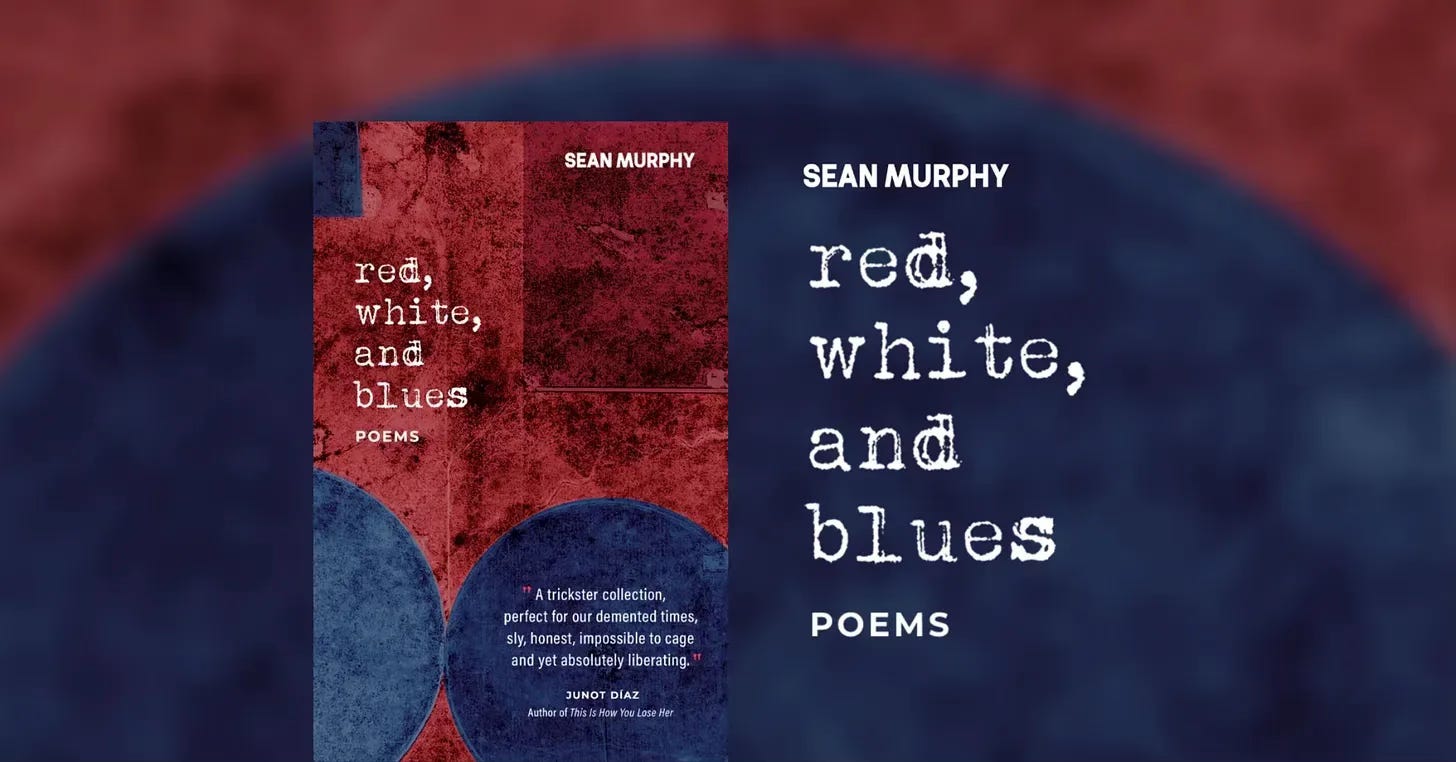
red, white, and blues is the fourth installment of a large, ongoing project acclaimed artist Matthew Shipp describes as “a kaleidoscopic, deep, and opulent journey.” Once more, I’m exploring America and its mythology through a series of poems that function as biography, history, and cultural commentary. Where the previous collections interrogated these concerns primarily through the lens of jazz and blues musicians, these poems home in on politics—and key players who have shaped our shared culture. A moral cross-examination covering history, war, religion, and pop spectacle, this collection asks what we worship, what we excuse, and what the stories we tell do to us.
I wrote red, white, and blues because I believe poetry can still tell the truth when other forms have failed us. These poems are not interested in neutrality; they are interested in clarity. They move through history and pop culture because that is where our myths live—where power learns to hide and where harm learns to look inevitable. (I also have come to believe poetry is the best way to mash up history, media, political commentary, and provides a succinct formula for connecting dots in ways Op-Eds, fiction, and social media grandstanding can’t and won’t). I wanted to write a book that names what we worship, what we excuse, and what we leave behind, while still honoring the strange, stubborn beauty that survives in language. If these poems bruise, I hope they also invite conversation. If they provoke, I hope they also connect. Art matters because it reminds us that we are not alone in our witnessing.
ii. On Death of a Salesman
Burn all the political books and essays: trivia masquerading as analysis that mostly measures horse races and trends, at best attempting to make sense of what’s already history; if you want to understand everything about the American experiment in all its good, bad, and ugly permutations, there’s no shortage of books to assist and enlighten, but for my money, you equip an impressionable enough mind with “Heart of Darkness,” “The Jungle,” pretty much anything by Orwell (and just for the record and to avoid cliche, I’d put “Down and Out in Paris and London” ahead of “1984” and “Animal Farm,” and probably put a single chapter from “The Road to Wigan Pier” up front, too; “Burmese Days” is like the more literate kissing cousin of “Heart of Darkness” while “Down and Out” expands and modernizes how much we evolved and simultaneously forgot –on purpose– after the regulations “The Jungle” inspired Teddy Roosevelt to make), and that’s a worthy education (fiction, of course, pulls together all the disparate threads that psychology, sociology, Econ, Political Science and History cover, all inadequately in their inevitable ways).
Kafka is, of course, unavoidable.
So many books about war (many of them essential) but for my money –after “Catch 22,” which is so prescient it’s practically a documentary, I’d put Tim O’Brien’s “The Things They Carried” up front as it –crucially– deals with the carnage that unfolds after soldiers return “safely” from the battlefield (with the acoustic version of Bruce Springsteen’s “Born in the USA” –the single-most misunderstood song in pop history— as the eleventh song in my reimagined reissue of “Nebraska” for soundtrack purposes).
Throw in “A Good Man is Hard to Find” by the immortal Flannery O’Connor (you get all the relevant shit from both Russian Lit and the bible in 20 pages, along with the blackest humor…how on earth did she pull that off? A miracle) and “Invisible Man” by Ellison.
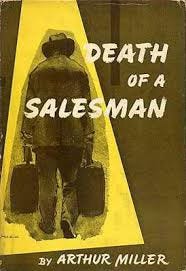
But if I had to just pick ONE text that somehow explains all the ways the American Dream (attainable for the precious or lucky or persistent few; myth and black hole for entirely too many) grinds down the vulnerable and disenfranchised, I’d happily drop Miller’s “Death of a Salesman” down on the table, along with the mic.
All of which is to say, boy did I enjoy reading this piece from The New Yorker. If it’s possible to feel every human emotion (joy, despair, envy, inspiration, resolve, optimism despite all available evidence to the contrary), this piece put me on that bumper car ride.
iii. Willy Loman’s Life
after Death of a Salesman
Nobody’s worth nothing
dead, some insist. And deep
jungles are full of diamonds—
but only if you can steal them.
*
There’s a secret they never tell you,
which is this: you have to sell yourself
to yourself, but to believe it you deny
the dream you’ve already been sold.
*
The life of a salesman? Nothing is free
anywhere—everything alive survives
in the wild with a trade-off. After all:
what are predators but peddlers of a sort,
working their territories, waiting and preying,
closing in for the kill so they’ll eat, then do it
all over again, until one day, at last, they can’t?